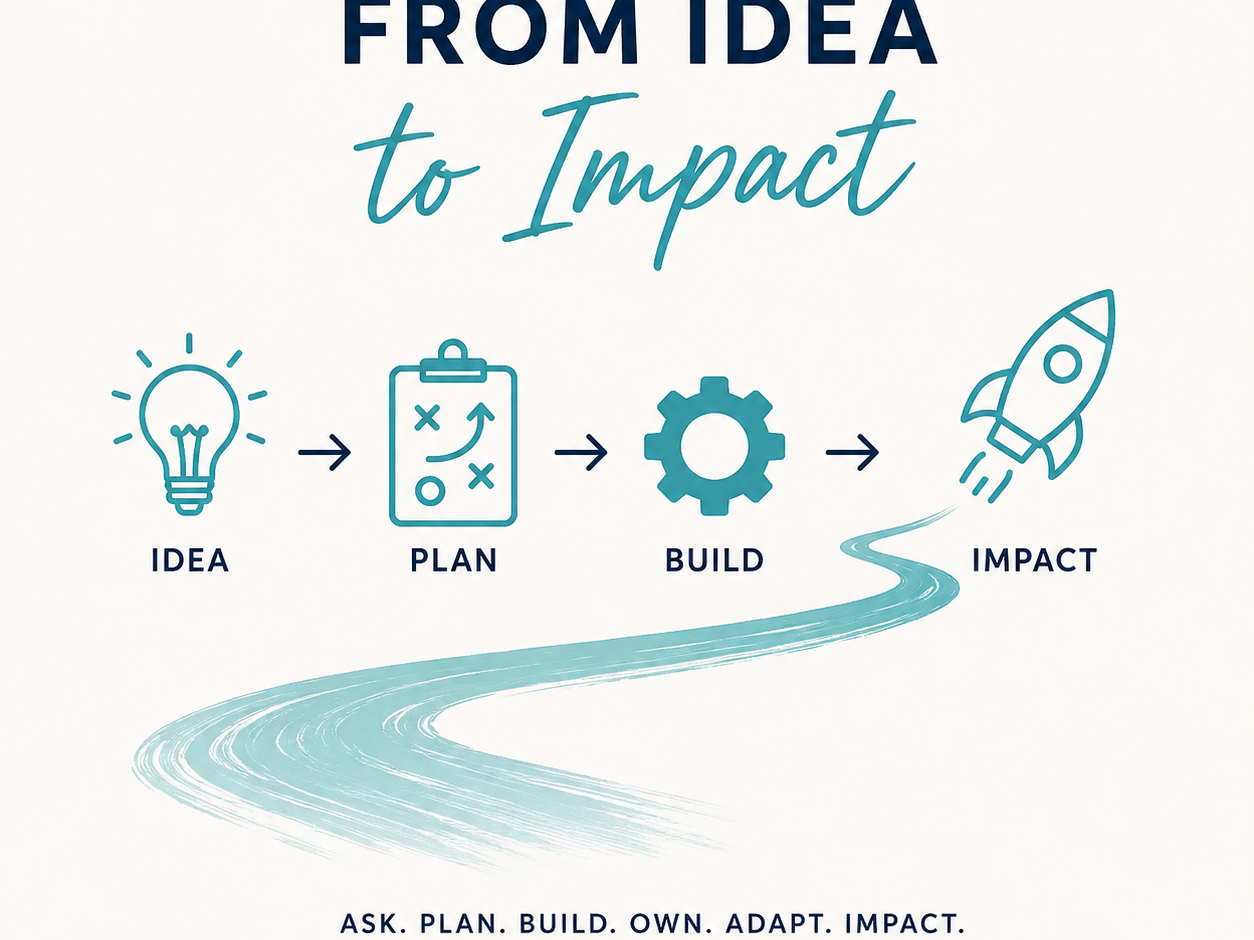
Grounded Generation
Two AI content systems, built to stay accurate, on-brand, and under my control
At a Glance:
• I built two AI content generators to make a slow, one-person content workload faster and repeatable — one works from outside sources, the other from the organization's own material.
• Speed wasn't the only goal: because this content carries the organization's name, I grounded the AI in our real knowledge base instead of the open internet, so every piece can be fact-checked and checked for alignment.
• Fact-check, alignment, and a human review pass are built into the workflow — nothing ships on the AI's word alone.
• The hard part was never using AI; it was the judgment to test it, catch where it failed, and keep control of the result.
Project Spotlight:
I build content systems around AI — but the AI is never the point. The point is everything I put in place to keep it honest.
Here's the problem I was actually solving. The organization needed a steady, credible content presence: useful pieces for the people who follow us, and a wider social presence to carry our mission further at a time when client budgets were tightening and visibility mattered more, not less. All of it was landing on one person, by hand. It didn't scale, and it couldn't — because content that carries an organization's name has to be right every time. Accurate. Properly sourced. Aligned with what we actually teach. Fast was never going to be enough on its own. It had to be trustworthy.
So I built two generators.
Learn, Share, Grow generator takes an outside article or video and turns it into a short, sourced educational piece for our audience — the main idea, the key learnings, a fact-check on whether the source is legitimate, and a check that it aligns with our philosophy before it ever goes out.
The Social Media Campaign generator works the other direction. It pulls from our own material and shapes it into the week's posts — a Tuesday carousel or a Thursday article, formatted and ready to drop straight into my campaign spreadsheet.
Two different jobs, one idea underneath.
The decision that made both work
I refused to let the AI write from the open internet. Instead I grounded it in our own knowledge base — our guidebooks, manuals, and slides — so every piece could be measured against what we actually teach rather than whatever a stranger posted online and called expertise. That grounding is the thing that makes the fact-check and the alignment check mean anything. Without it, "accurate" and "aligned" are just words you drop into a prompt and hope for.
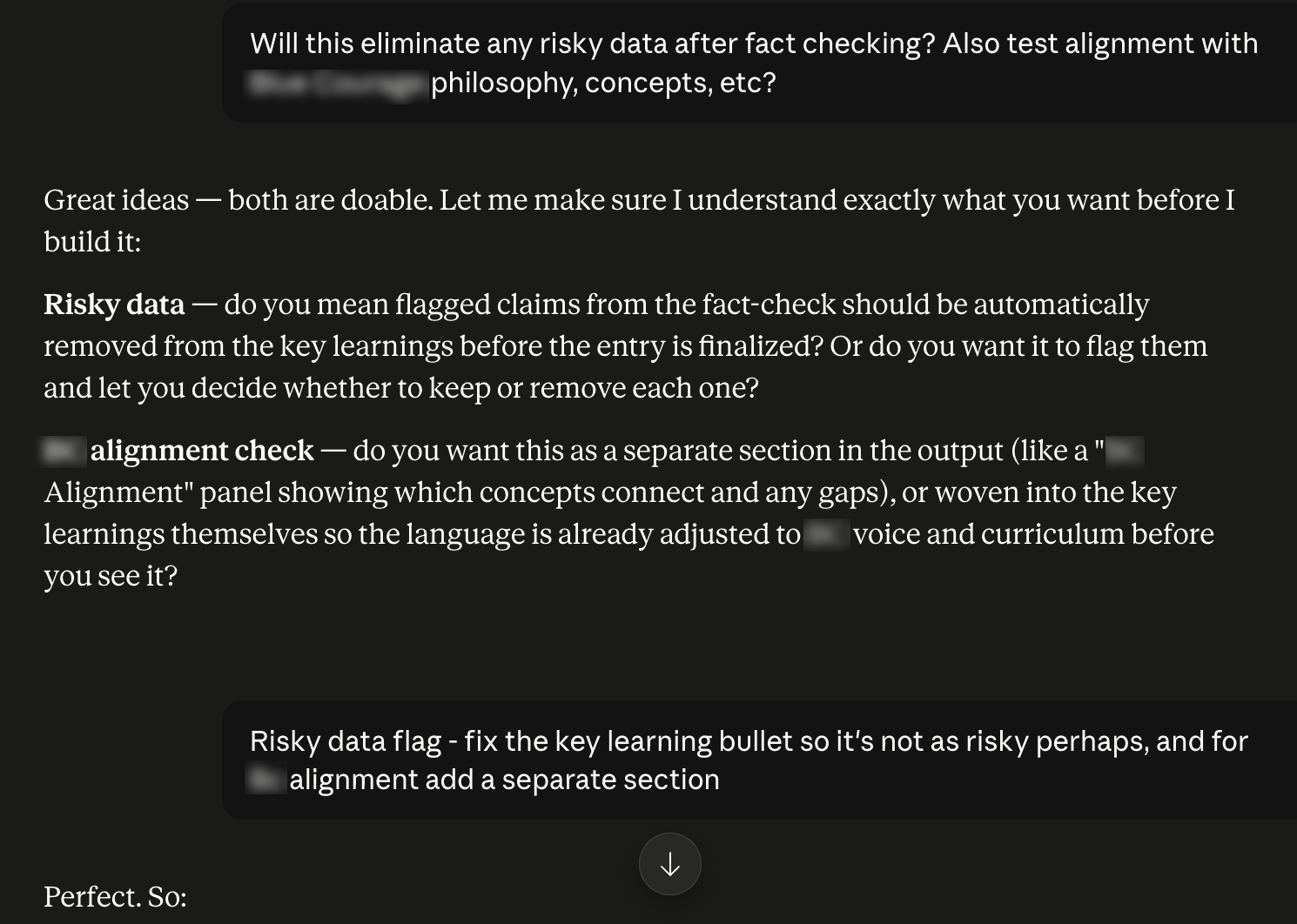
And those checks didn't appear by accident. I designed them in — deciding what the generator should flag, what it should test against our philosophy, and how that should show up in the output.
The part I'm actually proud of: the failures
Neither generator worked at first.
The grounding they depended on simply wasn't happening — retrieval was being blocked, and it took several rounds of testing and several failed versions before we traced it to the real cause: a permissions setting quietly breaking retrieval the entire time. The symptom was nowhere near the cause. The fix that finally held — embedding the curriculum directly into the generator — was Claude's suggestion, not mine. What was mine was refusing to accept a broken tool, staying in the diagnosis through every failed version until the cause surfaced, and recognizing a sound solution when it was offered. I didn't author the fix. I made the calls that got us there, and the call to adopt it. Knowing the difference between those two things is the whole skill.
The second failure was quieter. The carousels came back coherent and on-brand — but they wandered, trying to hold three or four related ideas across six slides instead of committing to one. Nothing about them looked broken. They just weren't focused, and focus is the entire job of a short carousel. I caught it by testing the output against what it was supposed to do, not against whether it looked fine — and directed the fix: one carousel, one topic.
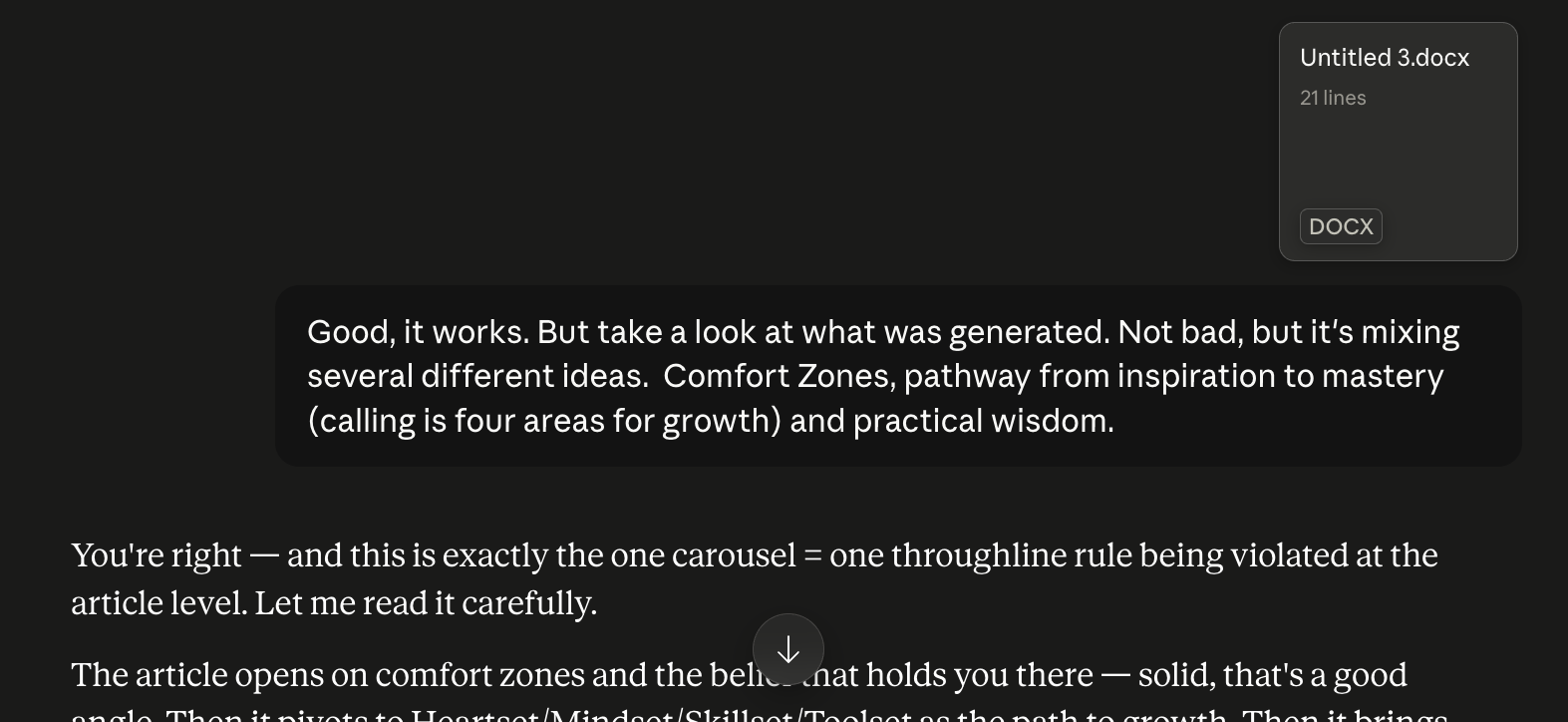
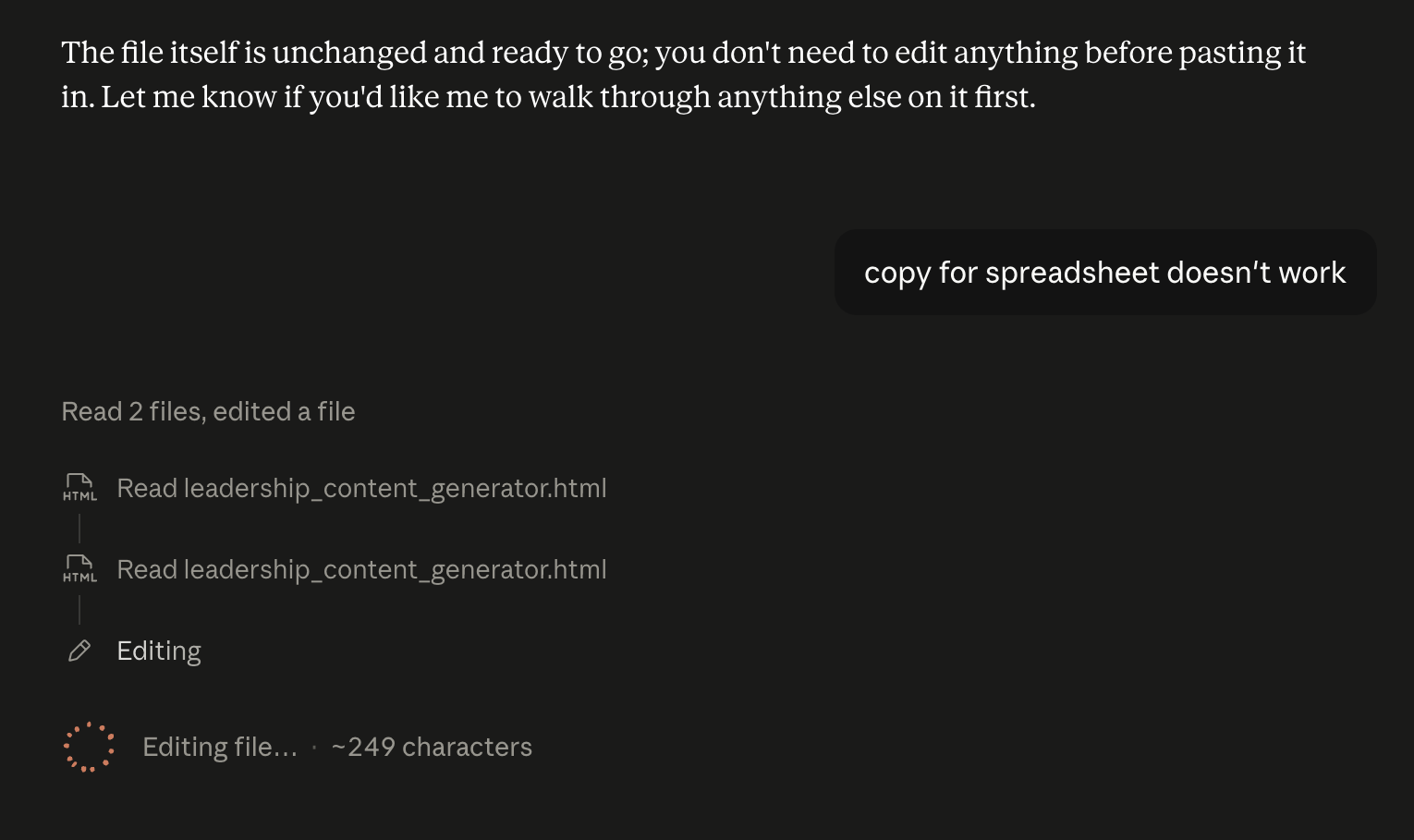
Even the small things get tested. When the spreadsheet copy didn't behave the way I needed, I caught that too, and had it fixed. I don't ship what looks done. I check whether it actually works.
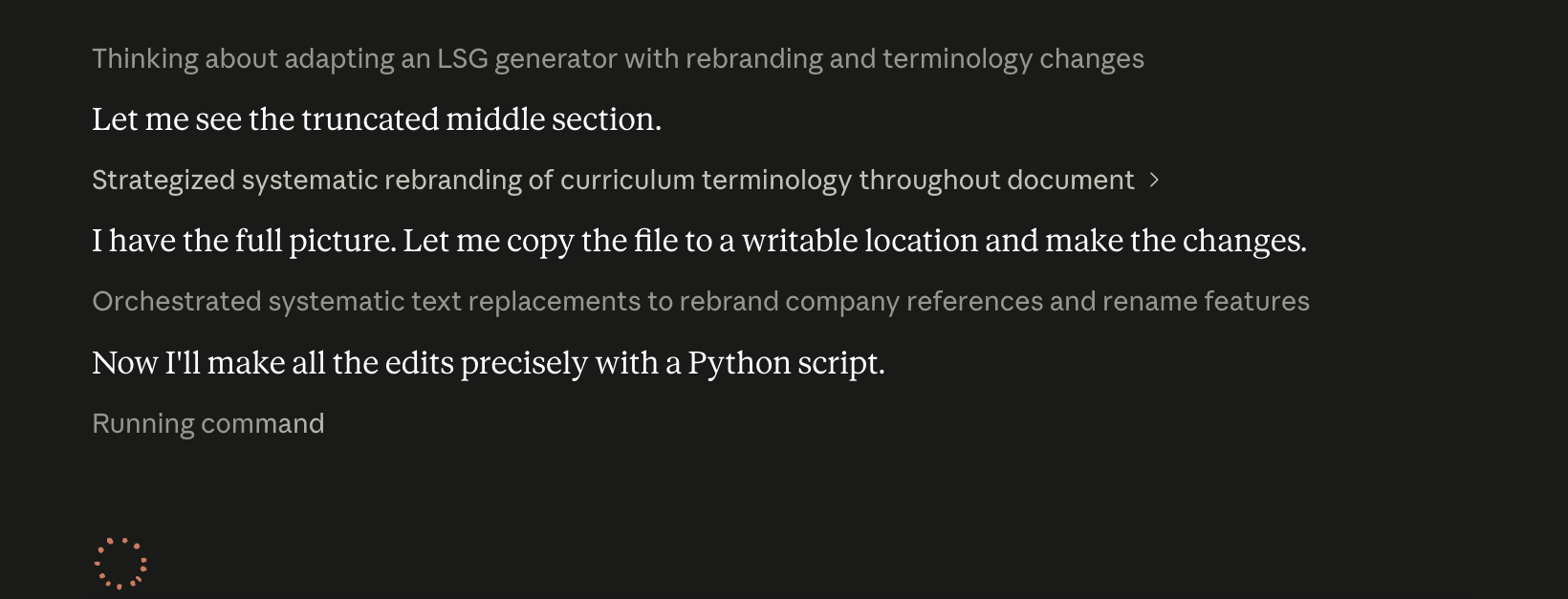
Everything shown here runs on a de-branded, generic version of these tools — same architecture, none of the organization's proprietary content — so the system is visible without exposing anything that isn't mine to show.
The takeaway
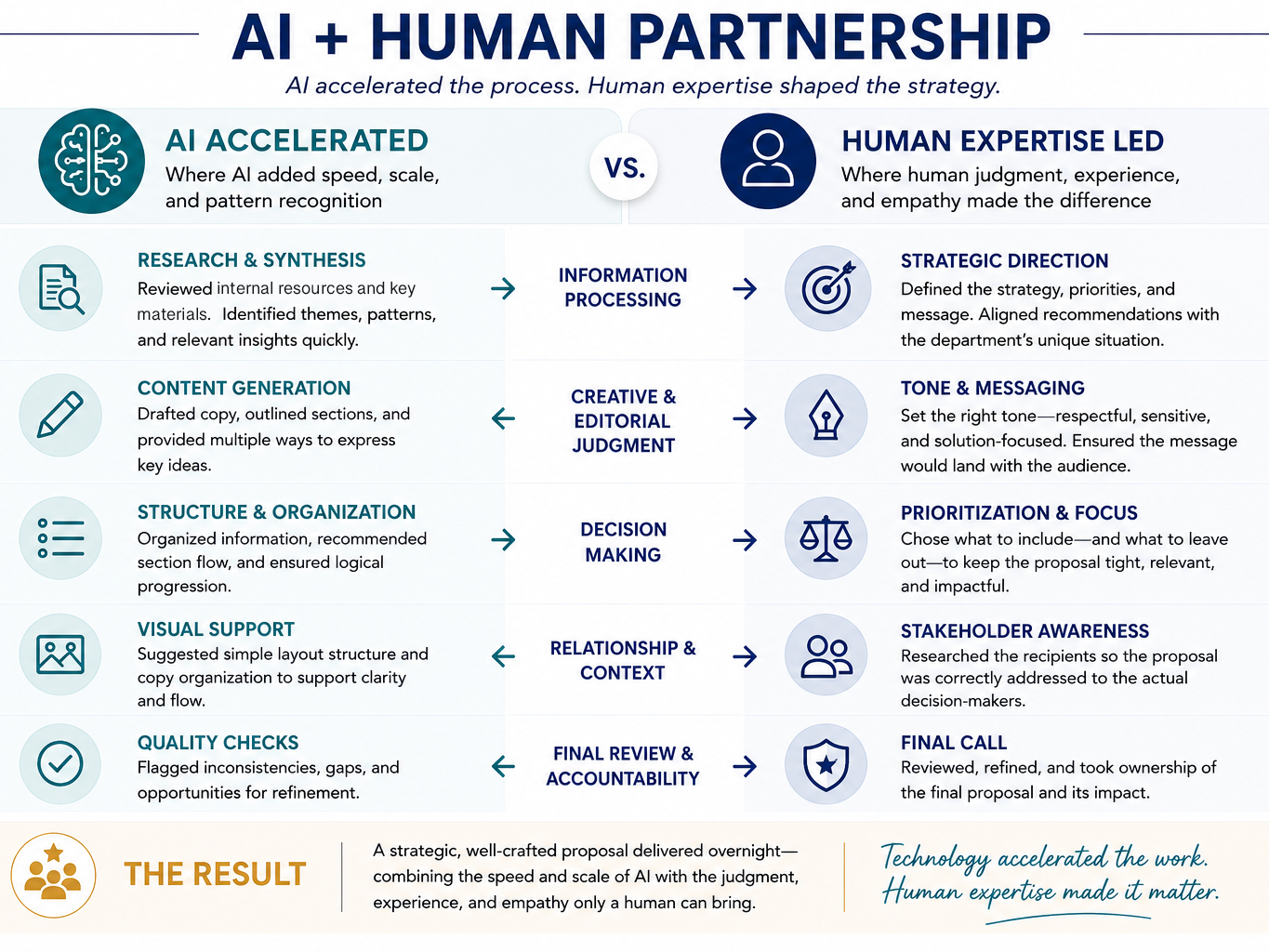
The tool can generate. It can't decide what's worth publishing, what actually counts as aligned, or whether something is true. That part is still mine — and honestly, the better these tools get, the more that part matters, not less. That's the whole reason I built the system the way I did: so the AI does the heavy lifting, and the judgment stays with me.
Skills: AI workflow design · instruction architecture · quality control · responsible AI use · business process improvement · systems thinking.