Showing the Possible
How I built a modern online course from salvaged footage — to prove a pathway years of arguing couldn't
At a Glance
• I built a complete, modern online resilience and well-being course out of orphaned footage — to prove a pathway the organization had resisted for years.
• The point was never just a course; it was evidence. Years of resistance to online learning had run on belief rather than data, and a finished, well-designed course was the one argument that couldn't be waved off.
• I didn't go in blindly. I researched how people actually learn on demand and let that research drive the design — shorter lessons, a Blueprint that builds as you go, a gated learning sequence.
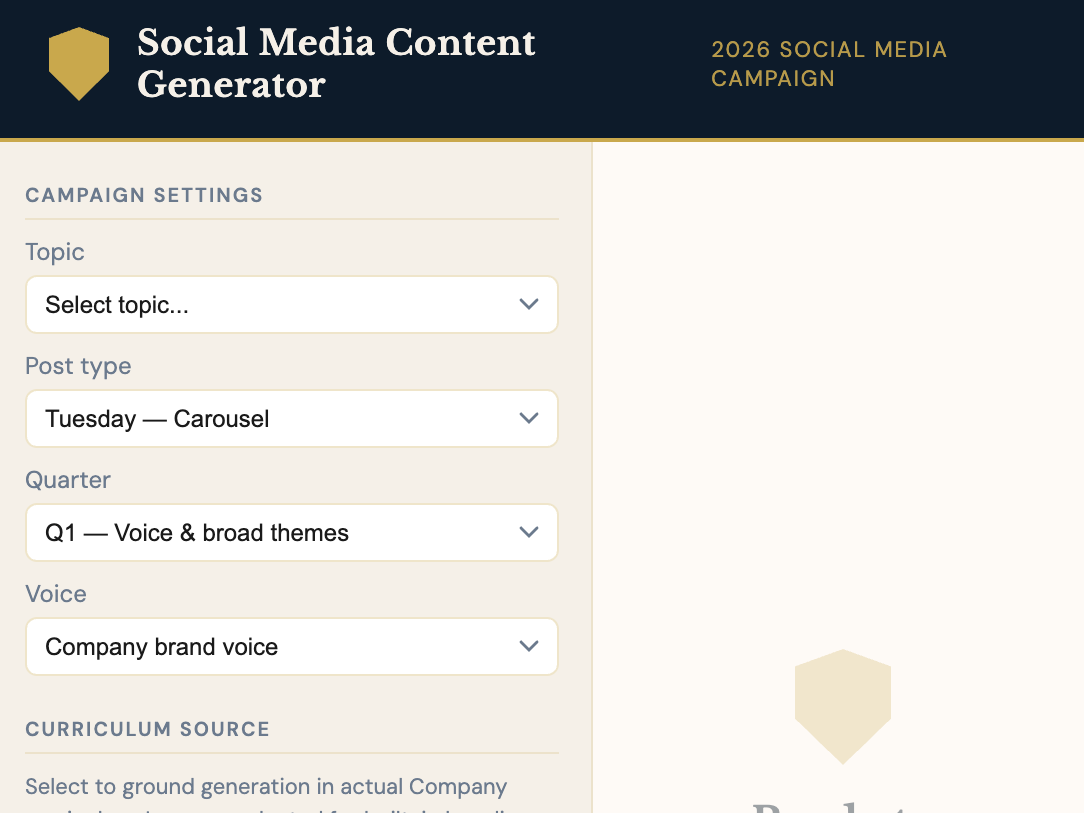
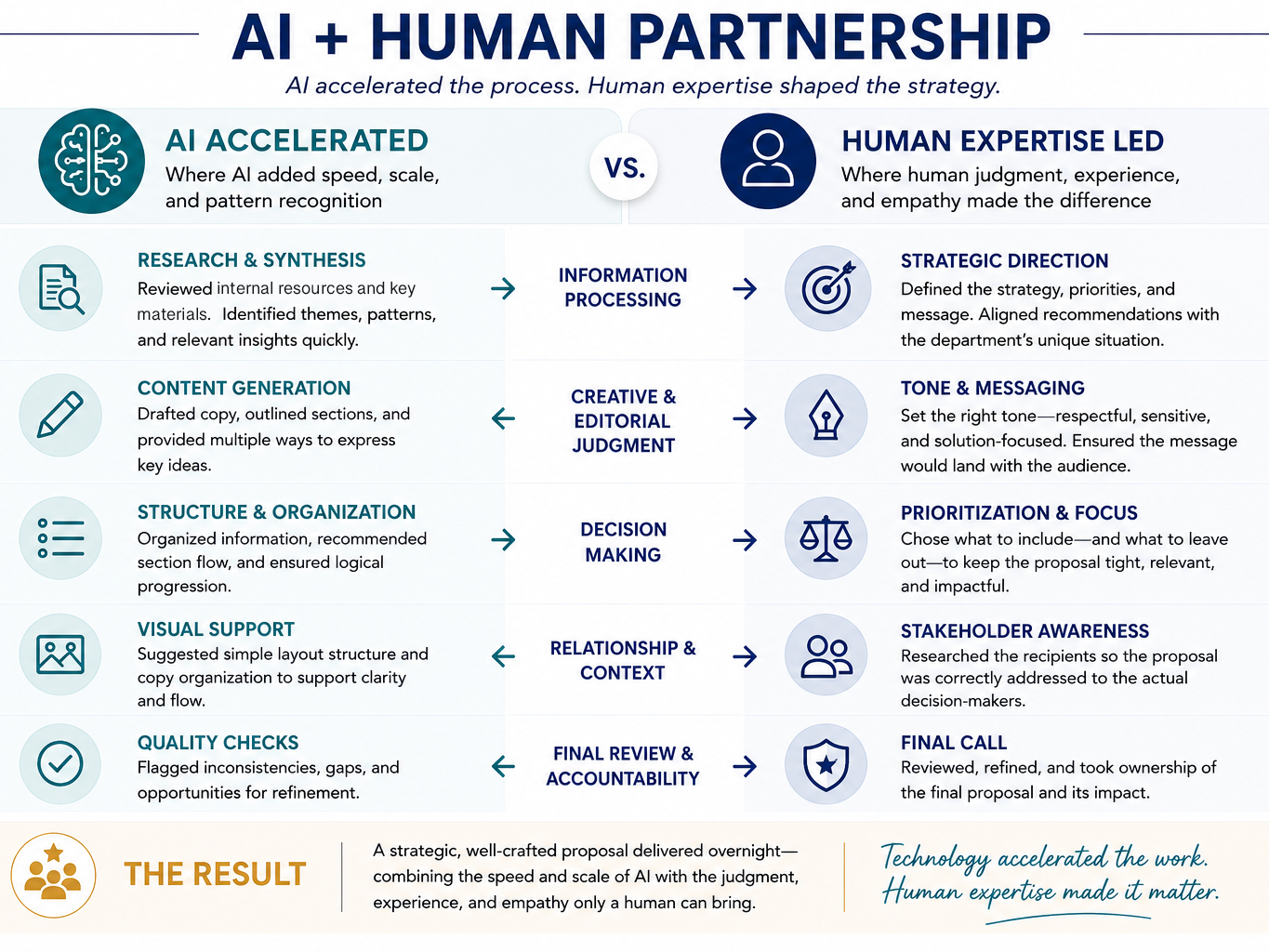
• AI accelerated the heavy lifting — transcript triage, sequencing, audio, generated media — while every decision about what the learner experiences stayed mine.
• I secured partner-content rights before I ever presented it, and held the finished course at a master-instructor review gate before anything ships.
Project Showcase:
For years I argued that online learning was a pathway my organization was missing. For years the answer came back the same way — not as evidence, but as resistance. So I stopped arguing and built the proof instead.
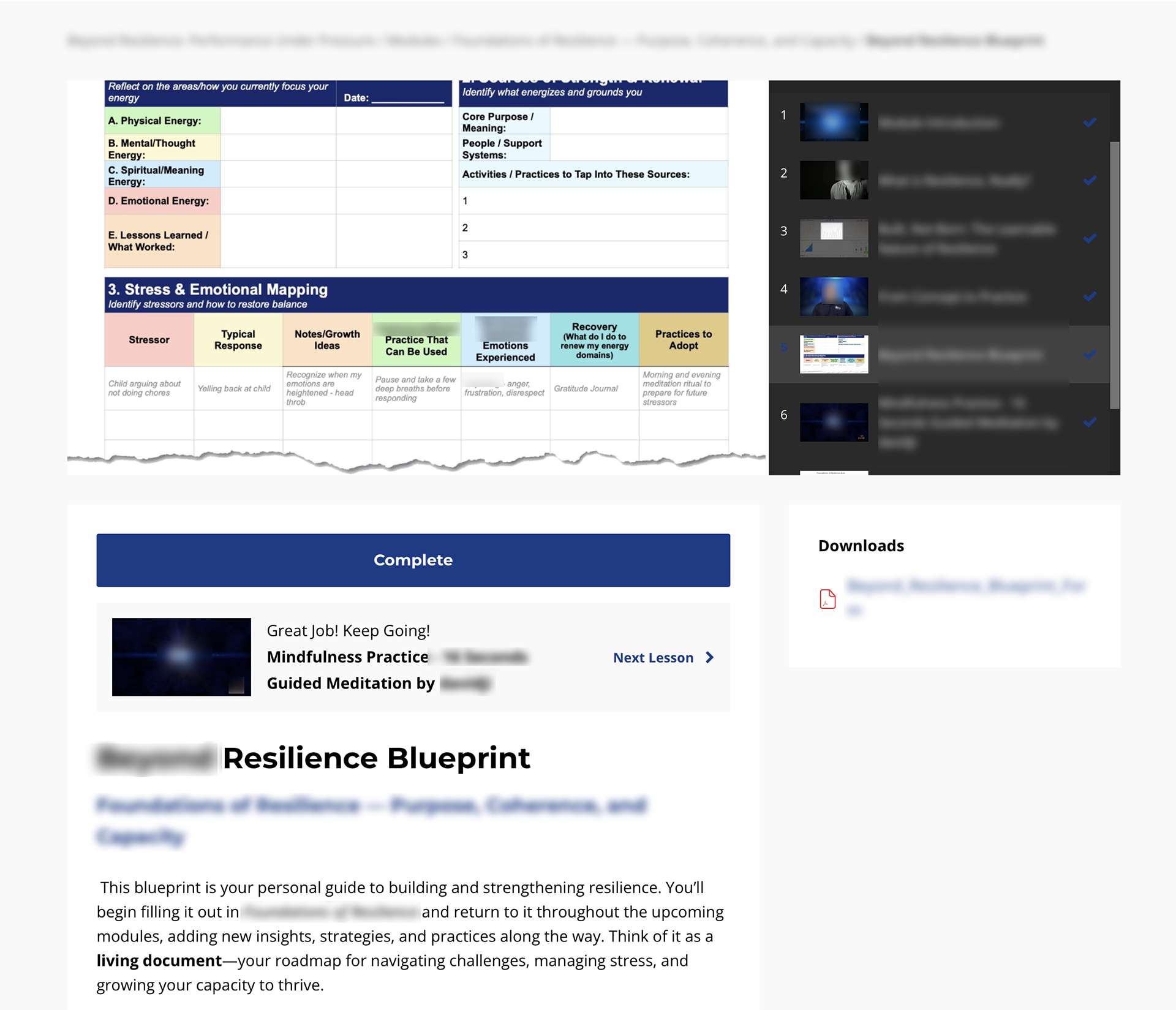
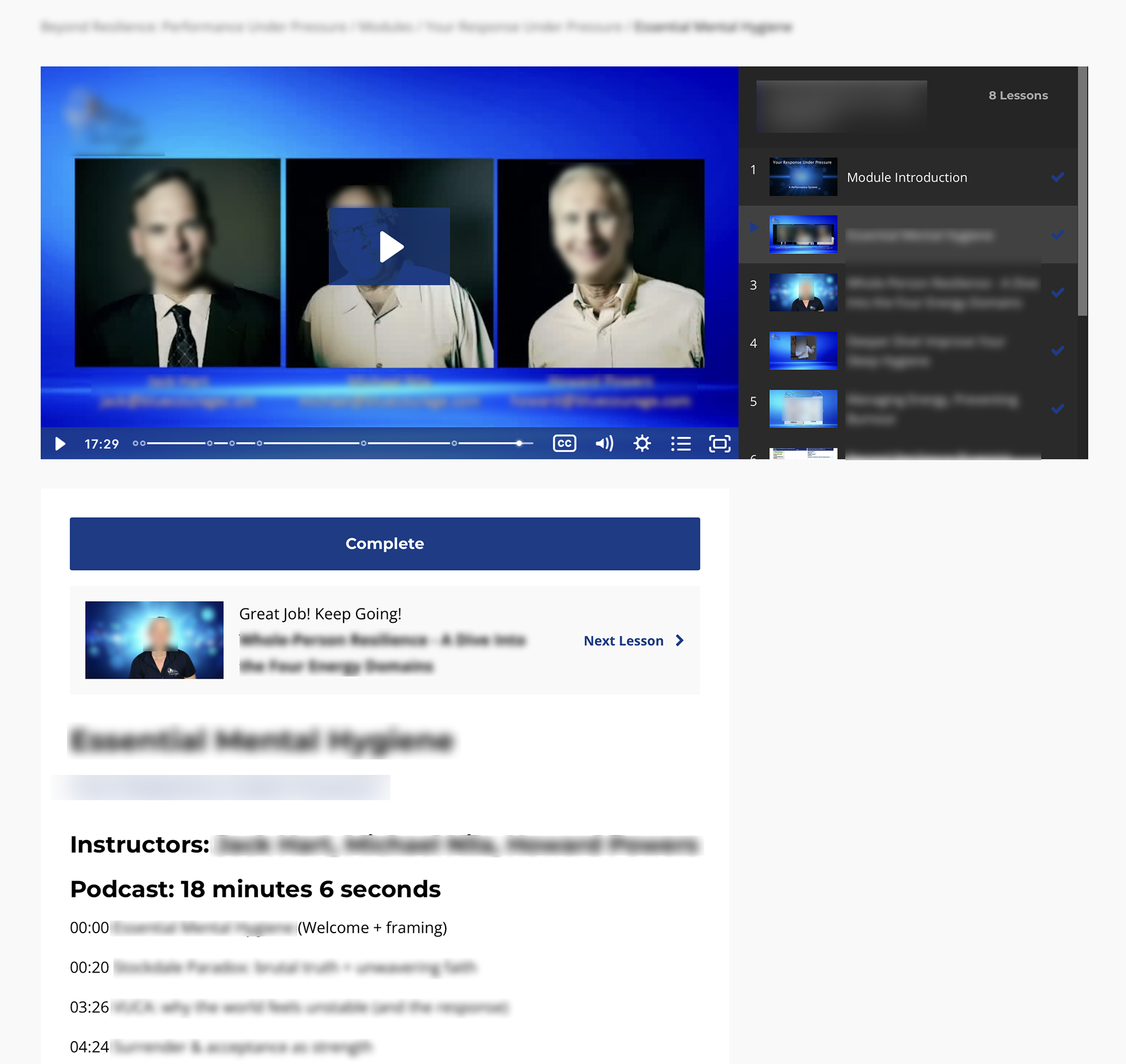
The result is a complete, modern online resilience and well-being course — four modules, twelve lessons, guided meditations, a build-as-you-go Blueprint, gated assessments, and a full multimedia production layer. And I built almost none of it from a clean start.
The salvage
The footage already existed, orphaned from an earlier client project that had stalled and then shut down — every instructor filmed, hours of raw video, and no actual course anywhere inside it. What I did wasn't create from a blank page. It was look at what already existed, see the course hiding in it, and rebuild.
I didn't go in blindly
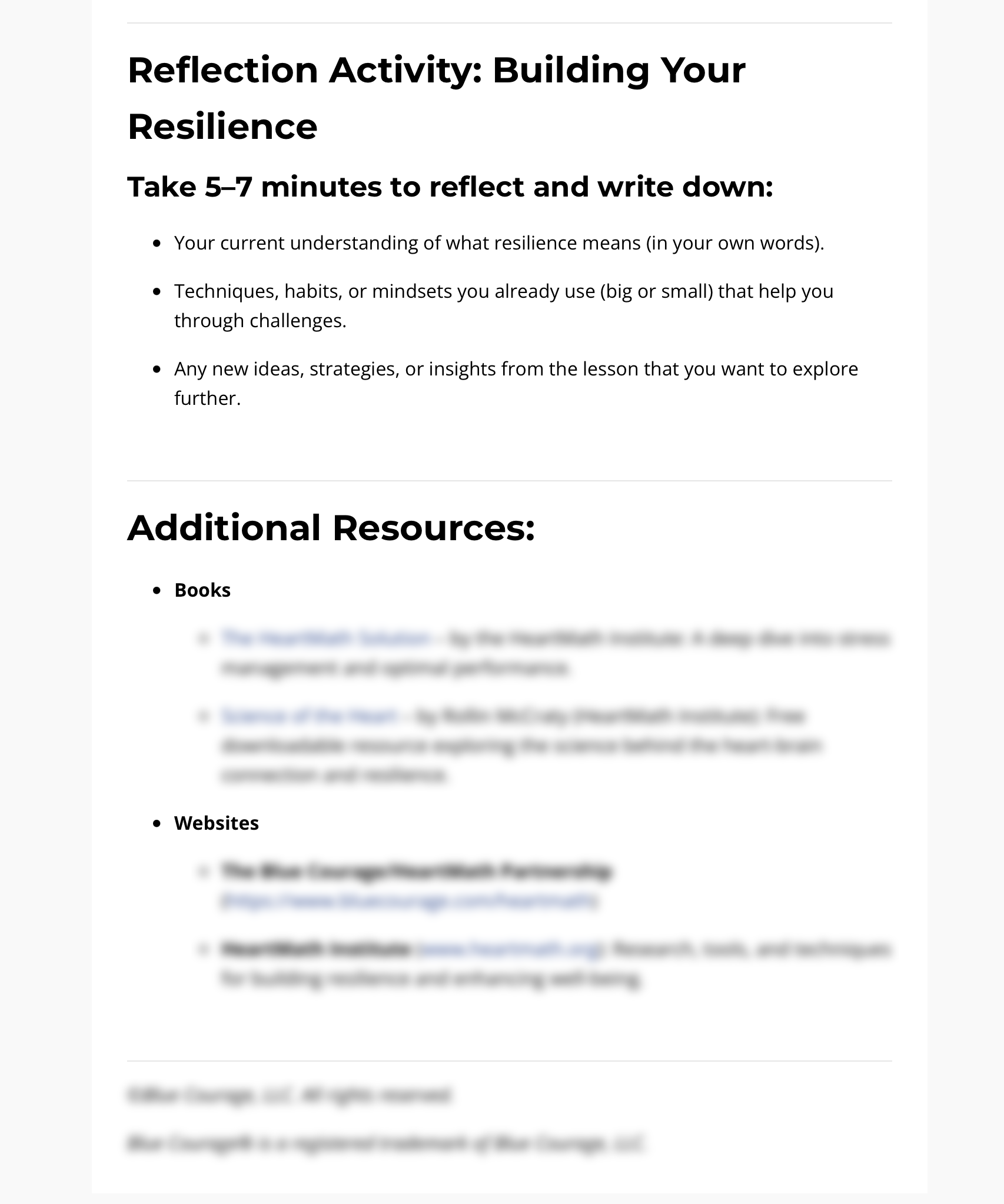
Before I designed a single module, I researched how people actually absorb content on demand — when no one is making them — and let what I found drive the structure. Shorter lessons, because that's what holds an on-demand learner. Reflection present in every lesson but never forced, because the depth is theirs to determine. A Blueprint that builds one piece per module instead of landing as one overwhelming task at the end. And a learning sequence gated so you finish a module before you move on — structure where it protects the learning, autonomy everywhere it doesn't.
AI carried the weight. I made the calls.
AI was the engine on the heavy, mechanical work: cutting through hours of transcripts to surface what was worth keeping, proposing a first sequence, enhancing the audio to a professional finish I'm not sure I could have reached by hand. But I grounded it in the real footage from the start — I chose the pieces worth building around and fed those in — so its job was to organize what existed, not invent what didn't.
And every decision about what the learner actually experiences stayed mine. When AI proposed an order, I pushed back — why here, why not there — and the modules moved. When a transcript pass dropped a moment that mattered, I put it back, then fed the finished transcript back in so the objectives described what the lesson had actually become.
Design that serves the learner, not the screen
I rebuilt the visual system around cohesion — one primary background per speaker inside a single color scheme, differences so subtle you'd never consciously notice them, instead of the fragmented look I'd inherited. I turned the longer videos into a podcast-style format so a learner who didn't want to watch could simply listen — while cooking dinner, folding laundry, driving to work. And I built graphics only where they taught something, never for decoration. Captions on every video, chaptering on the long ones, ADA-minded type throughout.
The part people skip
Before I ever presented this to my team, I secured the rights to the partner content the curriculum depends on and opened the conversation about compensation — because without it, a whole section of the course falls away. It's easy to skip and expensive to skip, and I handled it up front.
The course is built and complete, and it sits now at a review gate, waiting on our master instructors — because I won't put something into the world carrying the organization's name on my eyes alone.
The takeaway
The point was never the course. It was the case. You cannot answer an evidence-free objection with another opinion — you answer it with something people can see and touch. And the deeper failure was never picking the wrong direction; it was refusing to move in any direction at all while the ground shifted underneath. I couldn't prove online learning would work by arguing about it. I could only build it, put it in front of people, and find out for real.
That's what a finished thing does that an argument can't.
Skills: instructional design · learner experience design · self-directed research · multimedia production · AI-assisted development · visual communication · accessibility · IP & rights foresight · strategic initiative.