Strategy Under Pressure
How I turned a 4:30 phone call into a strategic proposal on someone's desk by morning
At a Glance
• A 4:30 PM call left me a single evening to build a strategic wellness proposal for a police department in crisis — no draft existed, the meeting was the next morning, and the person who should have handled it was unreachable.
• The department had lost five officers that year, suicide among them, under a brand-new chief. The stakes were the one thing the speed wasn't allowed to compromise.
• I was handed three offerings and the phrase "wellness strategy" — which is raw material, not a strategy. I built the actual argument: a resilience-and-well-being frame, and the judgment about which offerings genuinely fit a department in this specific condition.
• The most important call was the opening. The first draft led with the tragedy; I reframed it toward what the department could build — a decision about persuasion and about respect at the same time.
• AI carried the speed — grounded in the organization's own material so a draft existed in a few hours instead of a long manual night. The framing, the tone, and what stayed or got cut were mine.
Project Spotlight:
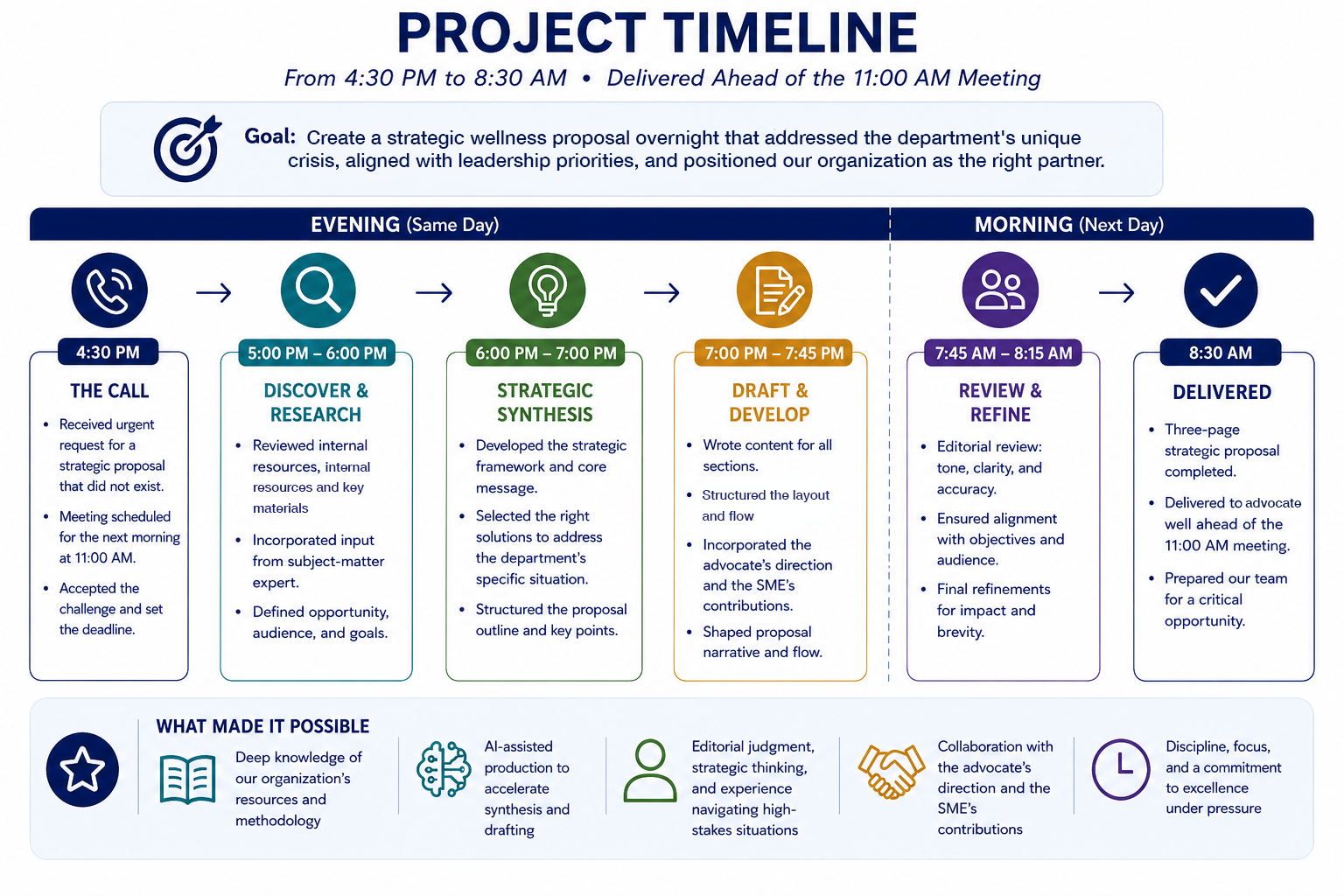
At 4:30 on a Monday afternoon, I got a call I wasn't expecting. An advocate for my organization had a meeting the next morning at eleven with a regional police department — and there was no proposal to bring into it. The person who normally would have handled it had been unreachable for days; when that finally ran out of road, it landed on me, the afternoon before, with a single evening to build something a few days' notice would have made comfortable.
The department was in crisis. It had lost five officers that year, suicide among them, under a brand-new chief who'd arrived that spring and cleared out the entire command staff. That's the part that mattered most — and it's the part the clock wasn't allowed to compromise.
By 8:30 the next morning, ahead of my own deadline and well ahead of the meeting, a three-page strategic wellness proposal was done.
The ask wasn't the strategy
Here's what I was actually handed: three offerings the advocate wanted included, and the phrase "wellness strategy." That's raw material, not a strategy. A menu says here's everything we sell. A strategy says here's what your situation calls for, and here's why.
So I built the argument the directive didn't contain. I took those offerings together with the conditions on the ground — five deaths, a new chief, a department under real strain — and organized all of it around a single frame: resilience and well-being. Then the question stopped being "which of our services can we list" and became "which of these genuinely serve a department in this specific condition, and in what order do they make sense." That connective reasoning is the difference between a proposal and a price sheet.
The most important call I made
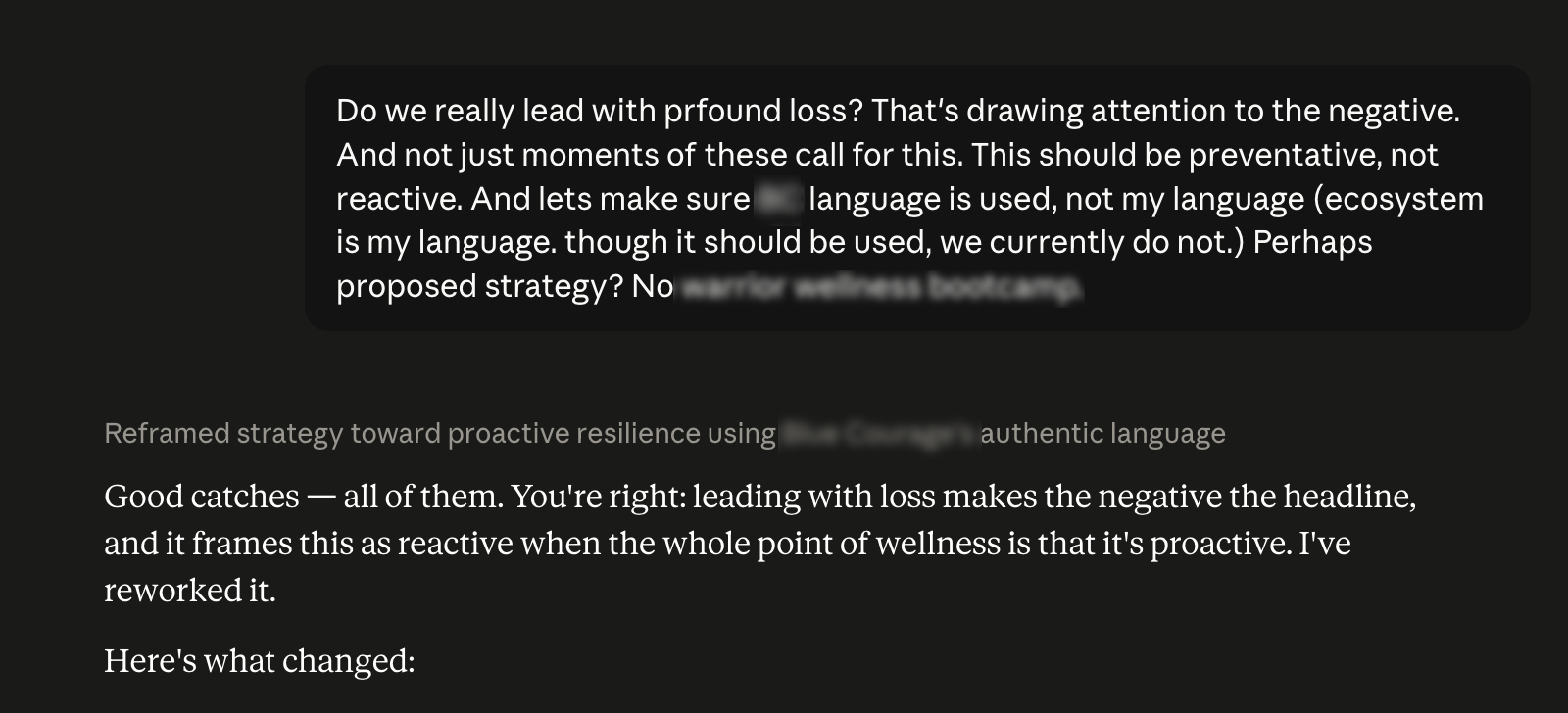
The first draft opened on the tragedy. Heavy, grim — effectively telling the department that five people had died and they needed to act. I stopped it cold.
You don't open a proposal on the wound. These people know what they've lost; stating it back to them isn't insight, it's just weight — and a pitch that opens by depressing the reader has already lost the room. Wellness is proactive by its nature, so the opening had to be too. I turned it toward what the department could build and become. That was a decision about persuasion and a decision about respect at the same time. Their dead are not leverage.
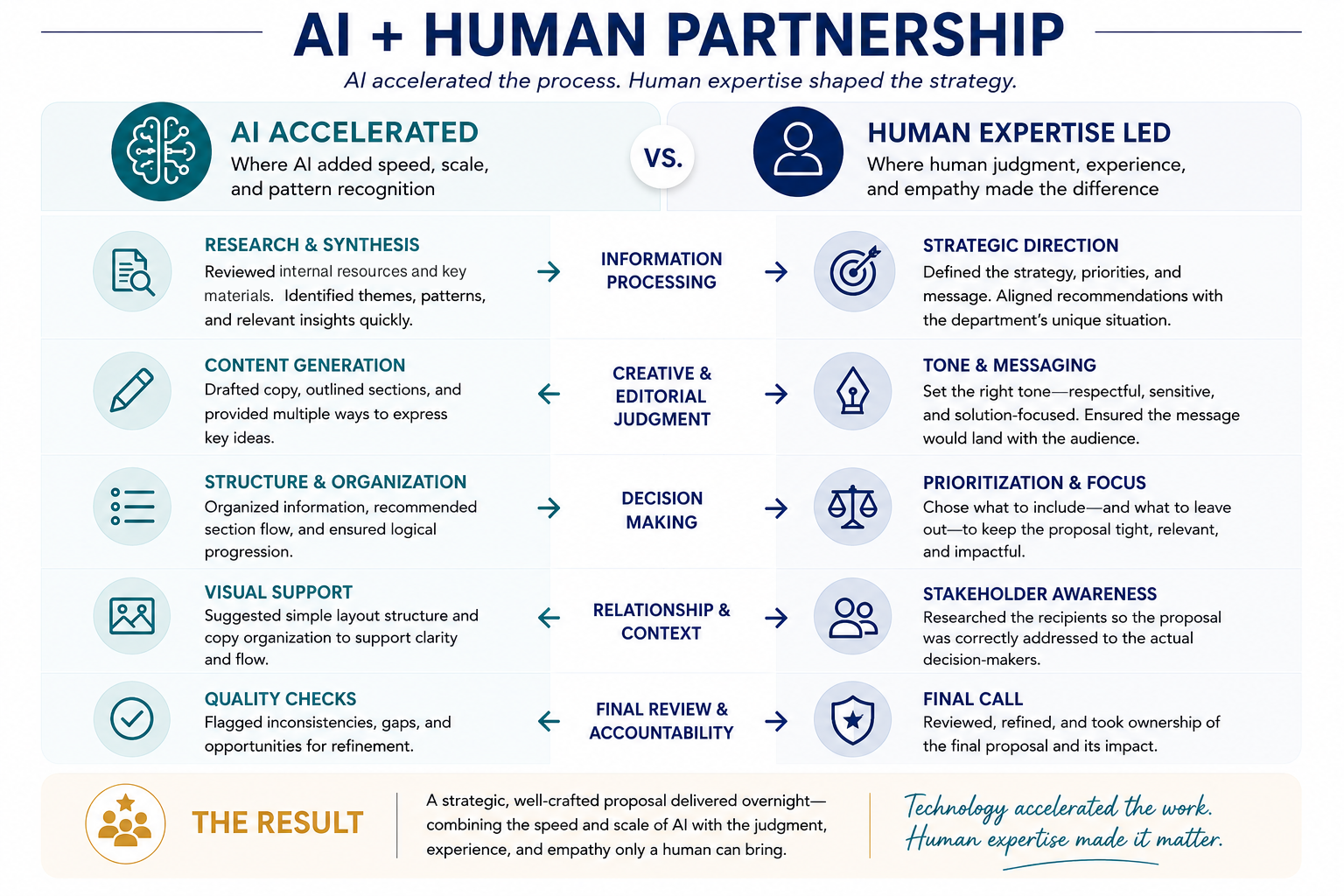
AI carried the speed. I kept the judgment.
A proposal like this, built by hand that evening, would have eaten hours I wasn't sure I had. So I grounded AI in the organization's own material, gave it the situation and the frame I'd already decided on, and had it produce a draft I could then work. The tool got me to a starting point fast, so the scarce hours could go where they actually mattered — the framing, the tone, the calls about what stayed and what went.
And there were real calls. When the subject-matter expert's additions grew the document by two pages, the work wasn't trimming for its own sake — it was protecting the strategy while cutting the sprawl, telling the contributions that strengthened the piece from the ones that only added length. I got it back to three pages. What survived the cut was the strategy.
The takeaway
Fast is a logistics achievement. Right is the professional one — and the second doesn't come free with the first. The speed here was borrowed from a tool. The judgment about how to open, what to keep, and how to speak to people in a hard moment was the part no machine was ever going to make.
That's the whole thing worth keeping: when there's no time and the stakes are real, can the thinking still hold?
Skills: strategic analysis & synthesis · business development · proposal development · stakeholder navigation · editorial judgment · responsible AI use · working under pressure.